The modular solar thermal power plant.
A modular high-temperature solar absorber system that produces high-pressure steam by direct evaporation in capillary tubes – and from it electricity and process heat at the same time.
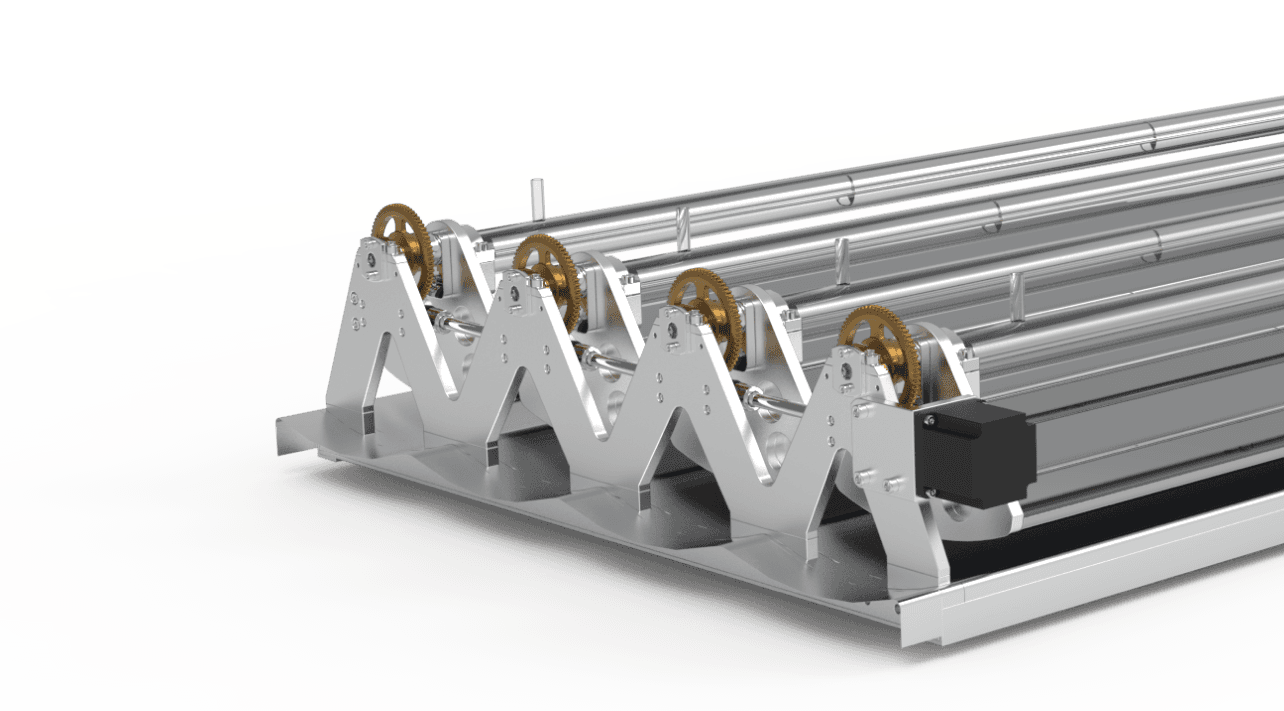
Direct evaporation in the patented absorber system.
The decisive difference to other concentrating systems lies in the receiver: enclosing the high-temperature absorber with reflector channels keeps losses small where other systems rely on selective coatings alone.
Design values, calculated for a site in central Germany.
From the idea to the application.
Four phases – click your way through the development of the SolarSteamer.
Electricity and high-temperature heat from one surface.
CTO and inventor Dirk Besier – a mechanical engineer specialising in thermodynamics – develops the principle of direct evaporation in capillary tubes with an enclosed high-temperature absorber. The aim: a power plant for central European solar radiation that supplies electricity and process heat at the same time, without rare earth elements. Unit Eco GmbH is founded in Eltville in 2012.
- solar heat, “electricity from heat” and decentralised generation in one device
- designed for the weather and sunlight of central Europe
- efficiency as the guiding measure: energy yield per area and capital employed
How the receiver works.
At its heart is the enclosure of the high-temperature absorber with reflector channels. Select the components to explore them.
3 mm inner diameter – water evaporates directly inside the tube, with no external heat exchanger.
Schematische Darstellung – zur Veranschaulichung des Funktionsprinzips, nicht maßstabsgetreu.
The module in detail.
Design views of the SolarSteamer module – mirror troughs, absorber tubes, tracking drive and pipe connections.
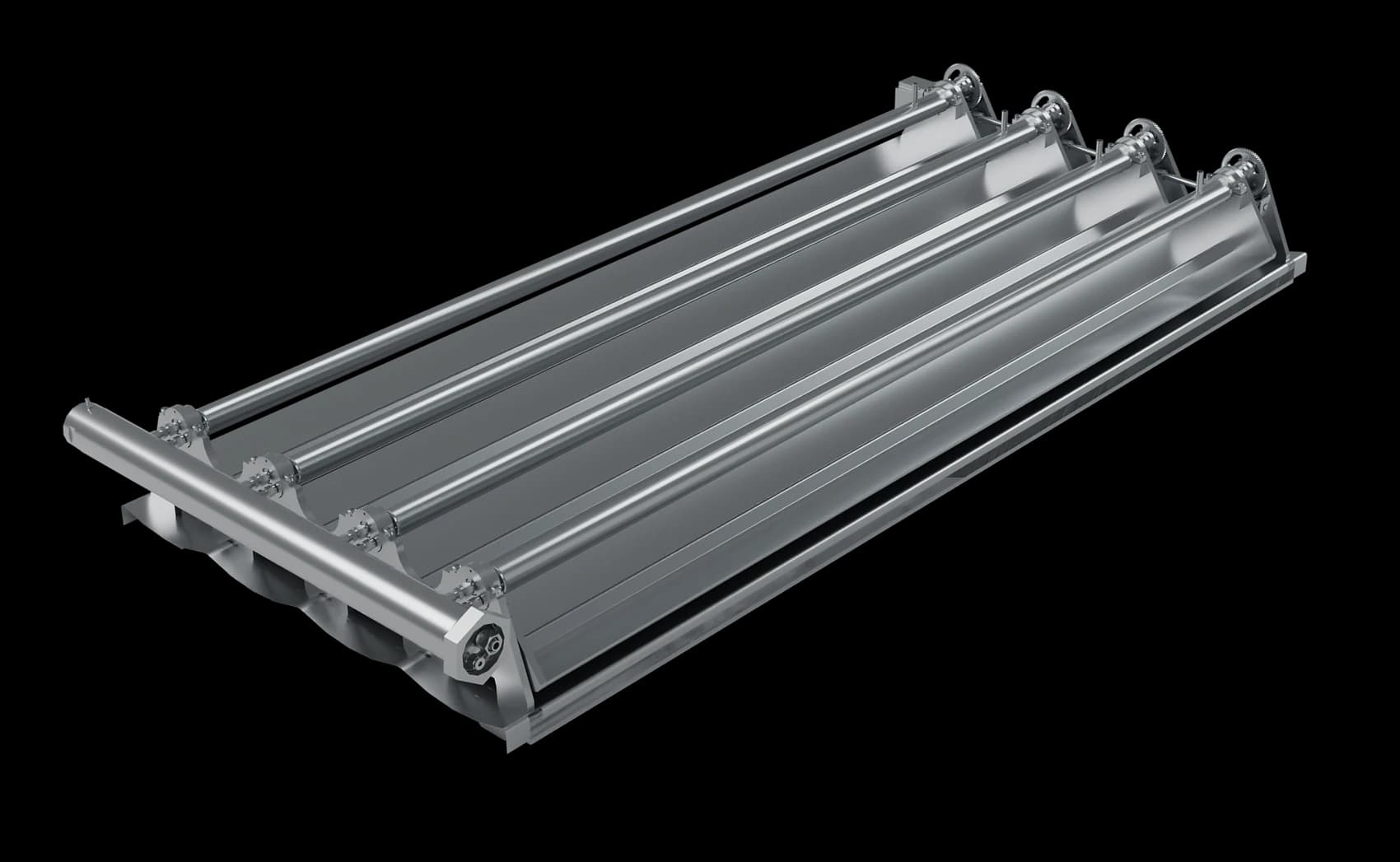
Four parabolic troughs with absorber tubes. At one end the tubes are joined by a cross tube, at the other sits the tracking drive.
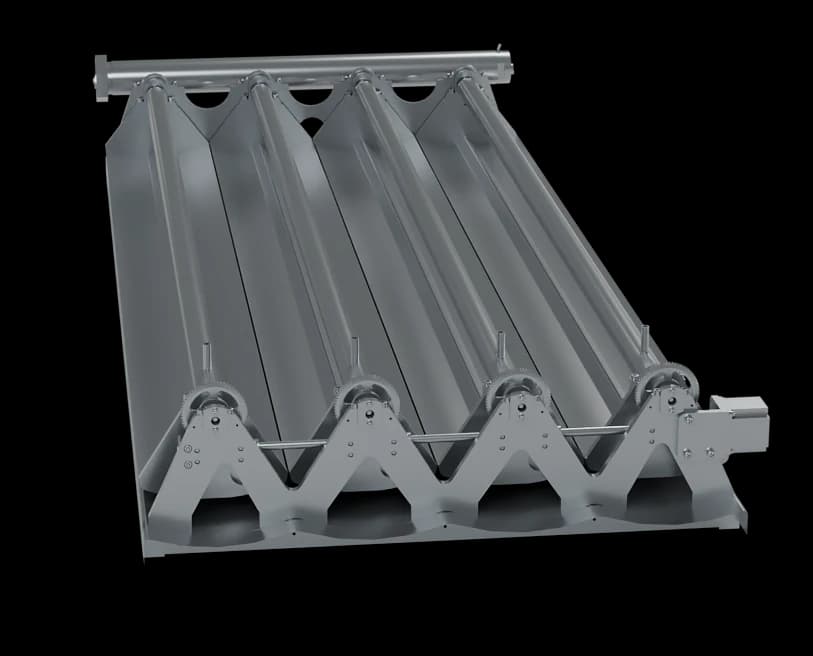
A-shaped supports carry the mirror troughs. A motor drives the tracking of the troughs through a shaft and gears.
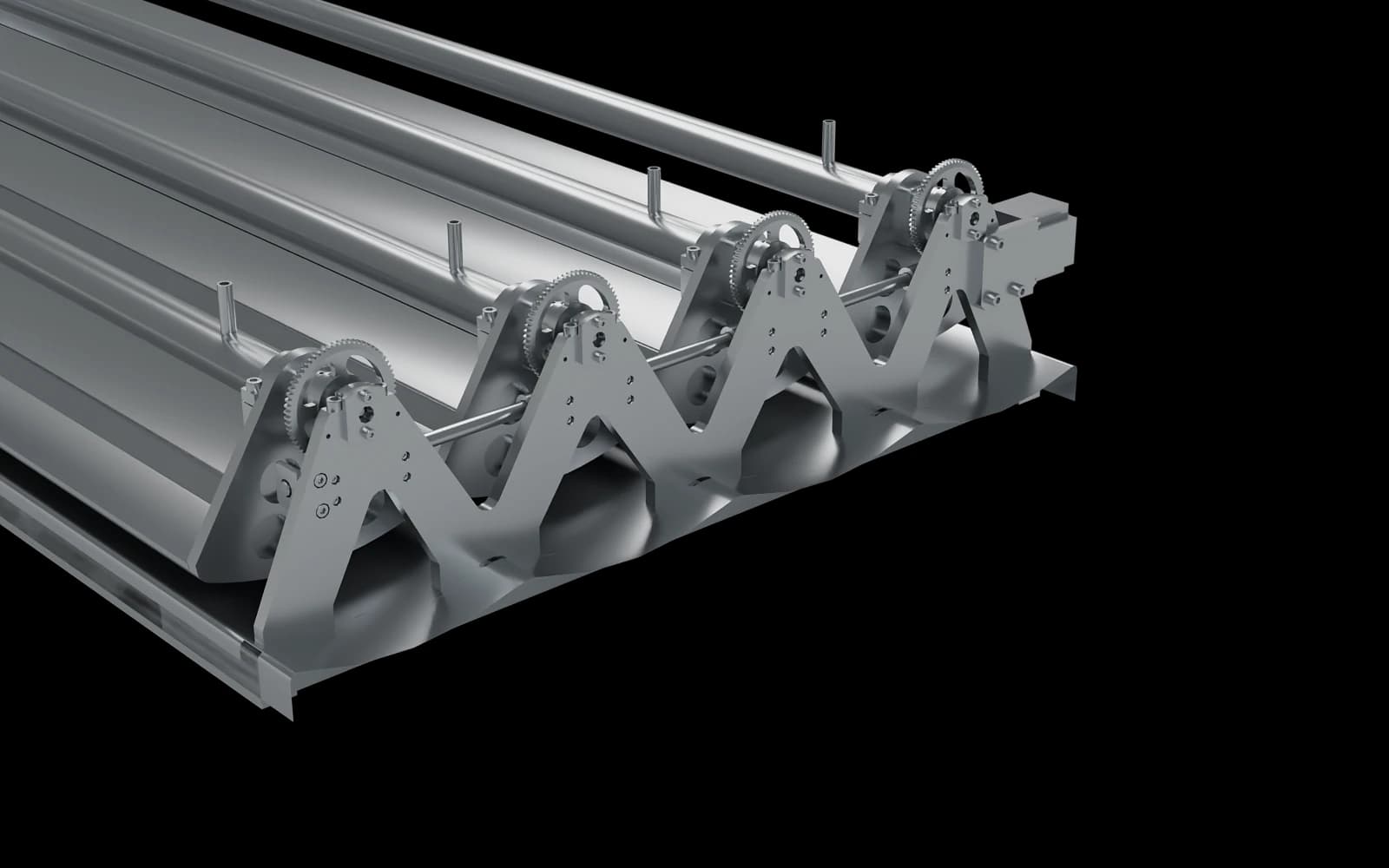
Servo motor, shaft and gears on the trough axes – this is how the mirrors follow the path of the sun.
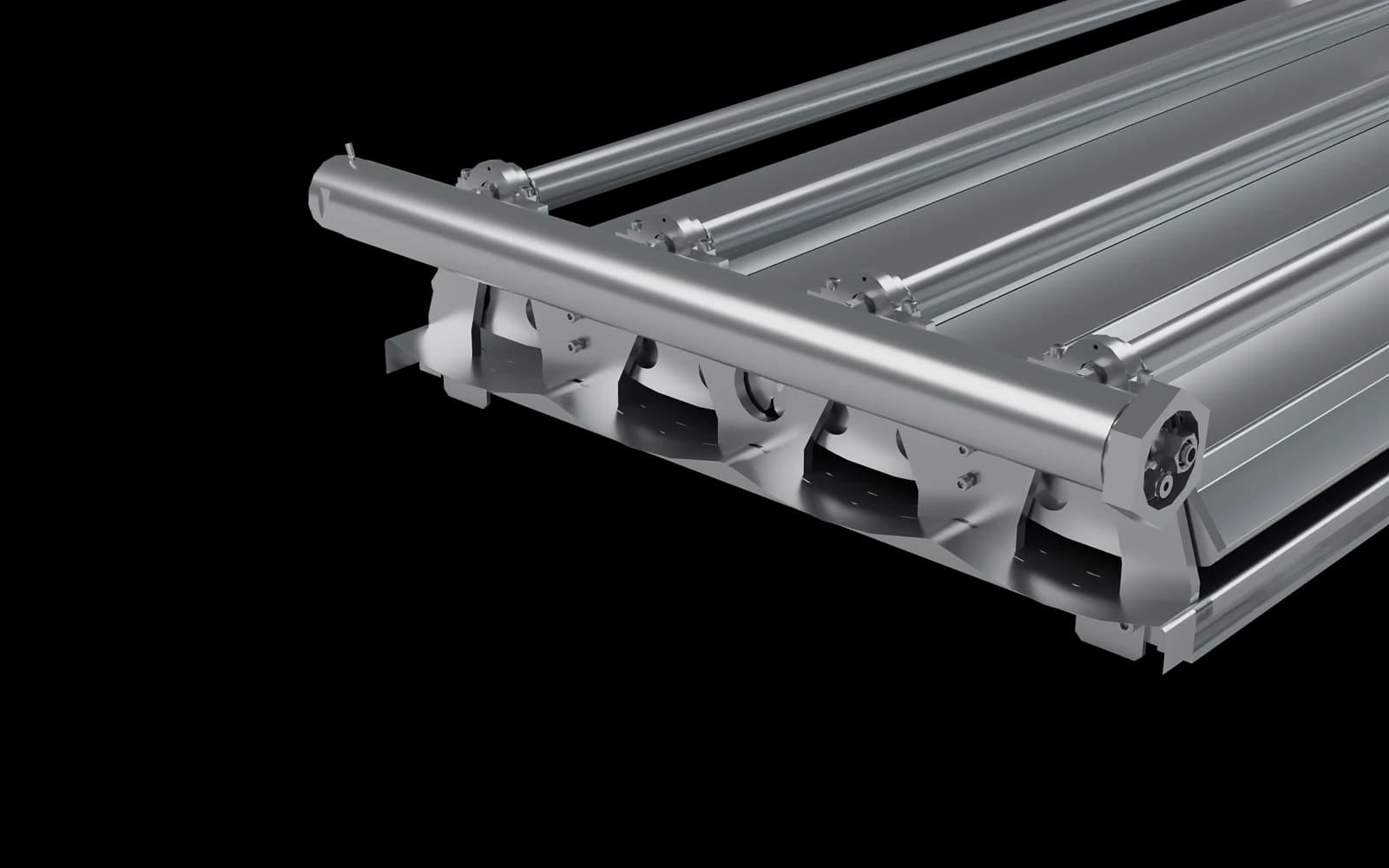
At the end of the module the absorber tubes are bolted to the cross tube.
3D renderings from the design models. Material presentation harmonised for this website.
High-temperature heat up to 570 °C – where today’s technology ends.
Electricity and process heat from one surface.
Because the mirrors move, the SolarSteamer can be designed as a hybrid: the plan is to integrate low-cost photovoltaics that work efficiently in weak light and supply electricity during the day – even under an overcast sky.
As with conventional combined heat and power, usable heat arises alongside electricity – as process heat at around 160 °C for industry or at 60 °C in the building, for thermal cooling, seasonal storage or drinking water production.
84 % of the incoming solar energy becomes usable.
- Process heat — 52 %
- Electricity (23 % steam engine · 9 % PV) — 32 %
- Conversion loss — 16 %
Electricity and heat instead of just one of the two.
electricity and high-temperature heat from one surface
low-temperature heat only, max. ~80 %
electricity only, ~22 % electrical
Design values, calculated for a site in central Germany.
An example system pays for itself in about 4.3 years.
Example calculation for a commercial operation: a system with 100 m² of module area (83 modules) and integrated high-temperature storage, in series production. All prices net, that is excluding VAT.
The electricity generated replaces grid supply at a commercial rate of 27.15 ct/kWh net; a small surplus is fed into the grid.
The usable heat from power generation replaces natural gas at a commercial price of 10.2 ct/kWh net – a revenue stream of its own alongside electricity.
The integrated store releases the energy when it is needed instead of selling surpluses cheaply to the grid.
For comparison: vacuum tube collectors deliver heat only and, at today’s prices, pay for themselves after around ten years or later. Photovoltaics with a battery store of the same size takes considerably longer.
Calculated for a commercial operation that consumes most of the electricity itself. Private households pay higher gross prices; there the system pays for itself faster. Assumptions: 28,000 kWh of electricity and 50,000 kWh of heat per year (design values for central Germany), 90 % own consumption at 27.15 ct/kWh (average German commercial electricity price 2026, Verivox), 10 % feed-in at 2.7 ct/kWh, natural gas at 10.2 ct/kWh (commercial, Verivox 07/2026), maintenance and insurance €1,600 per year, capital service 6 % per year over 20 years. All prices net. An example calculation, not an offer – actual figures depend on site, consumption and tariff.
We provide detailed documents on economics and planning to registered investors step by step in the Investor Center.
Investor Center